



The Centre for Addiction and Mental Health (CAMH) in Toronto is recruiting participants for a study on antipsychotic dosing. The study is open to adults 18 and older living with schizophrenia who are taking one antipsychotic medication.
SSC shares research studies that may be of interest to our community. Sharing a study is not an endorsement.
Posted August 2026

Research from the Canadian Institutes of Health Research looks at how cannabis use affects young people at risk of psychosis. Dr. Romina Mizrahi and her team found reduced brain connectivity in people with early psychosis and in those at risk, with the same reduction seen in cannabis users. The risk is highest for people who begin using cannabis before the age of 16.
What is Schizphrenia?
Schizophrenia is a complex mental illness that affects how a person thinks, feels, behaves and relates to others. The illness occurs in both men and women, but it is slightly more common in men.
The first episode typically occurs in the late teens to early twenties—usually earlier for men than for women. People can also develop the illness later in life. As many as one person out of 100 may experience schizophrenia.

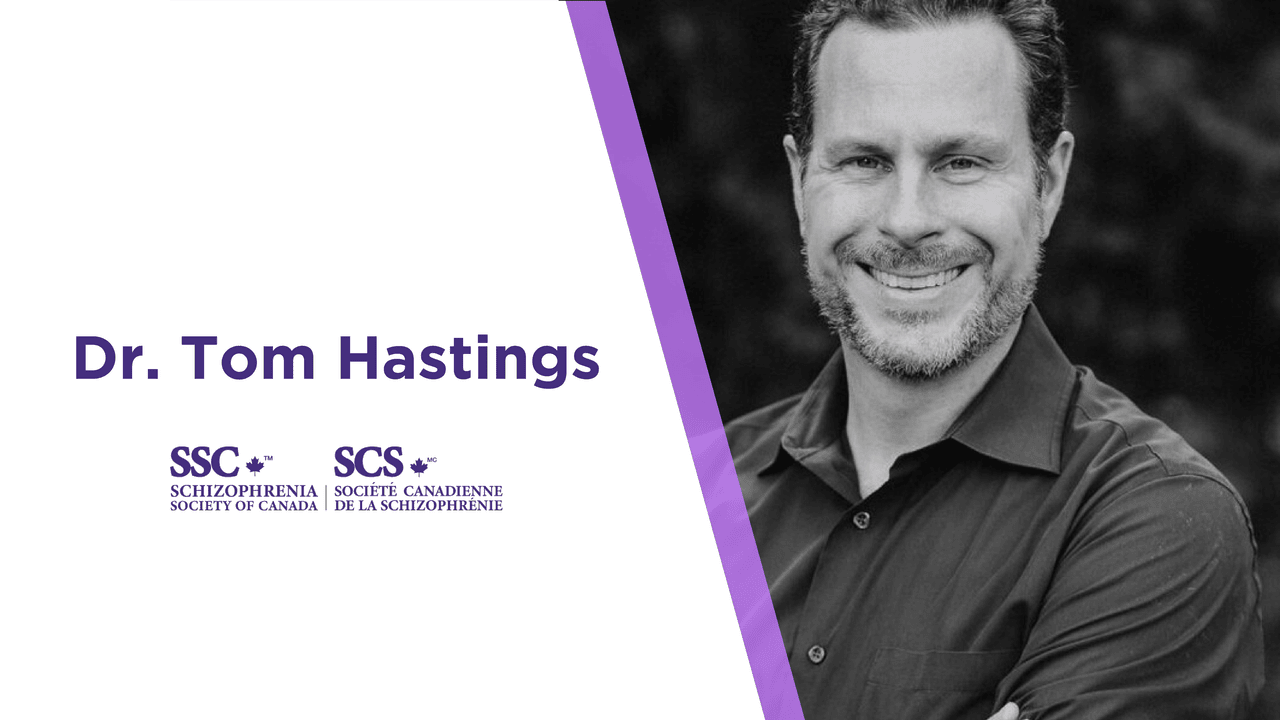
Dr. Tom Hastings Webinar
Join Dr. Tom Hastings for an informative webinar exploring schizophrenia, treatment options, and recovery.
Build a Canada where people living with early psychosis and schizophrenia achieve their potential.
While our new website is still under development, we invite you to reach out directly should you have any questions at [email protected].

OUR VALUES
- Schizophrenia and early psychosis are medical illnesses that, like other medical illnesses, have variable expression/effects on symptoms, function and response to treatments.
- Schizophrenia and early psychosis are caused by a number of different factors; from multiple genetic or environmental factors or from a combination of both.
- The SSC fully supports the important role of research in all areas related to schizophrenia and early psychosis (biological, psychological, spiritual, and social determinants of health)
- Persons with schizophrenia and early psychosis are entitled to efficient multi-disciplinary and integrated evidence-informed treatment and community support services.
- Persons at the early phases of their illness are entitled to real secondary prevention (early intervention and treatment) through specialized first episode early psychosis clinics and their collaborators.
- Persons with schizophrenia and early psychosis are to be included as full citizens in accessing education, employment, housing, medical services, recreation and social supports.
- Whenever possible families are essential partners in the care and the treatment and recovery plans of persons with schizophrenia and early psychosis, and deserve respect and support
- Persons with schizophrenia and early psychosis must be included in their treatment planning, care and recovery plans.
- Persons with schizophrenia and early psychosis and their families are not to be blamed for this illness.
- The SSC values collaboration at all levels to ensure that caring, compassion, hope, and recovery remain at the heart of our movement.